Project Overview
Biomechanical Arm
Study of biomechanical systems inspired by modern engineering principles and real-world prosthetic development. This project explores the complete workflow from concept research through modeling, materials, and final presentation.
This project explores how engineering principles can influence the design of believable next-generation prosthetics. Drawing inspiration from biomedical engineering, hydraulic systems, carbon-fibre construction, and electromagnetic joint concepts, the goal was to design a prosthetic that feels grounded in real-world research while remaining visually compelling.
Mechanical structure with anatomical influence.
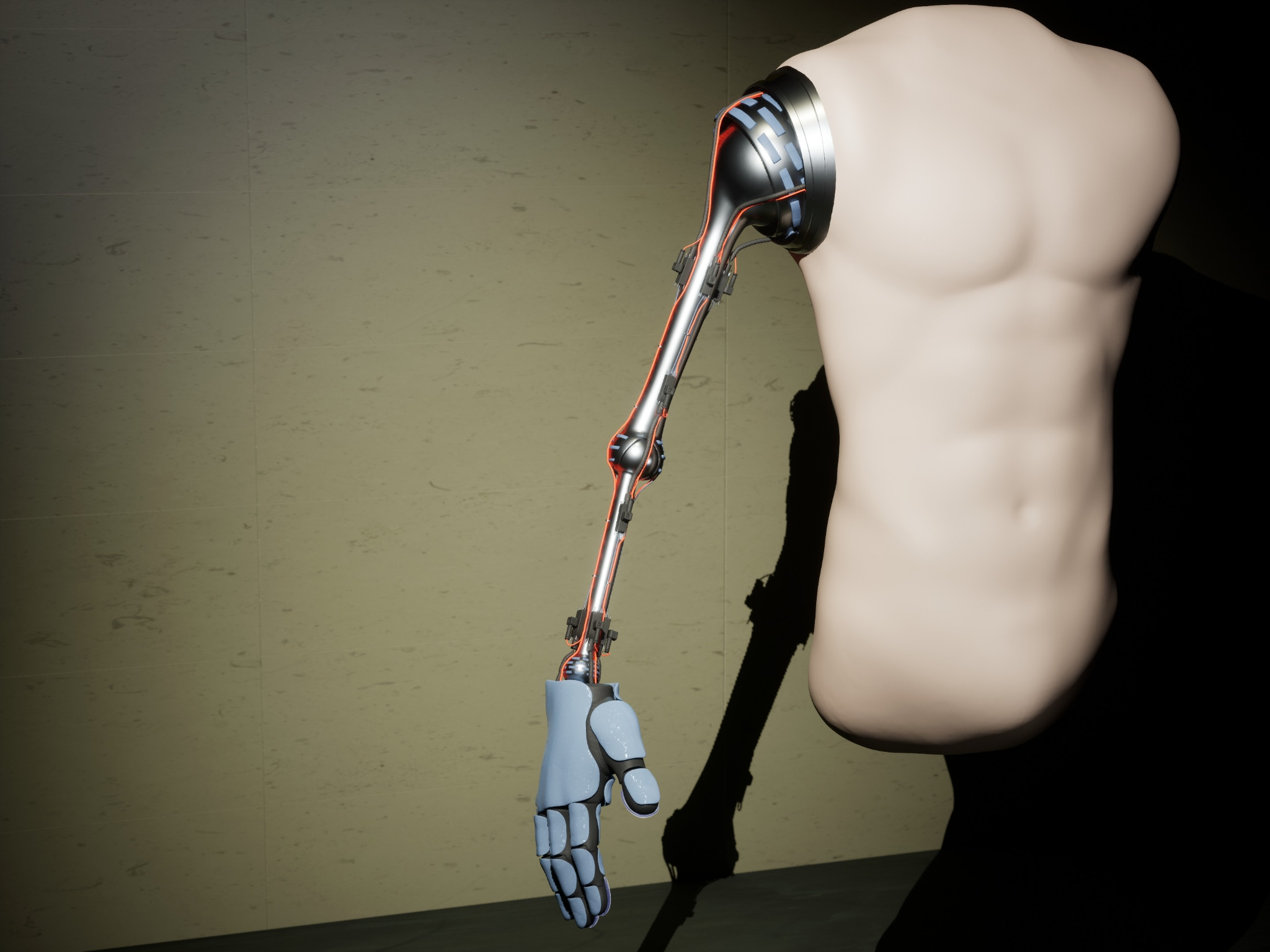
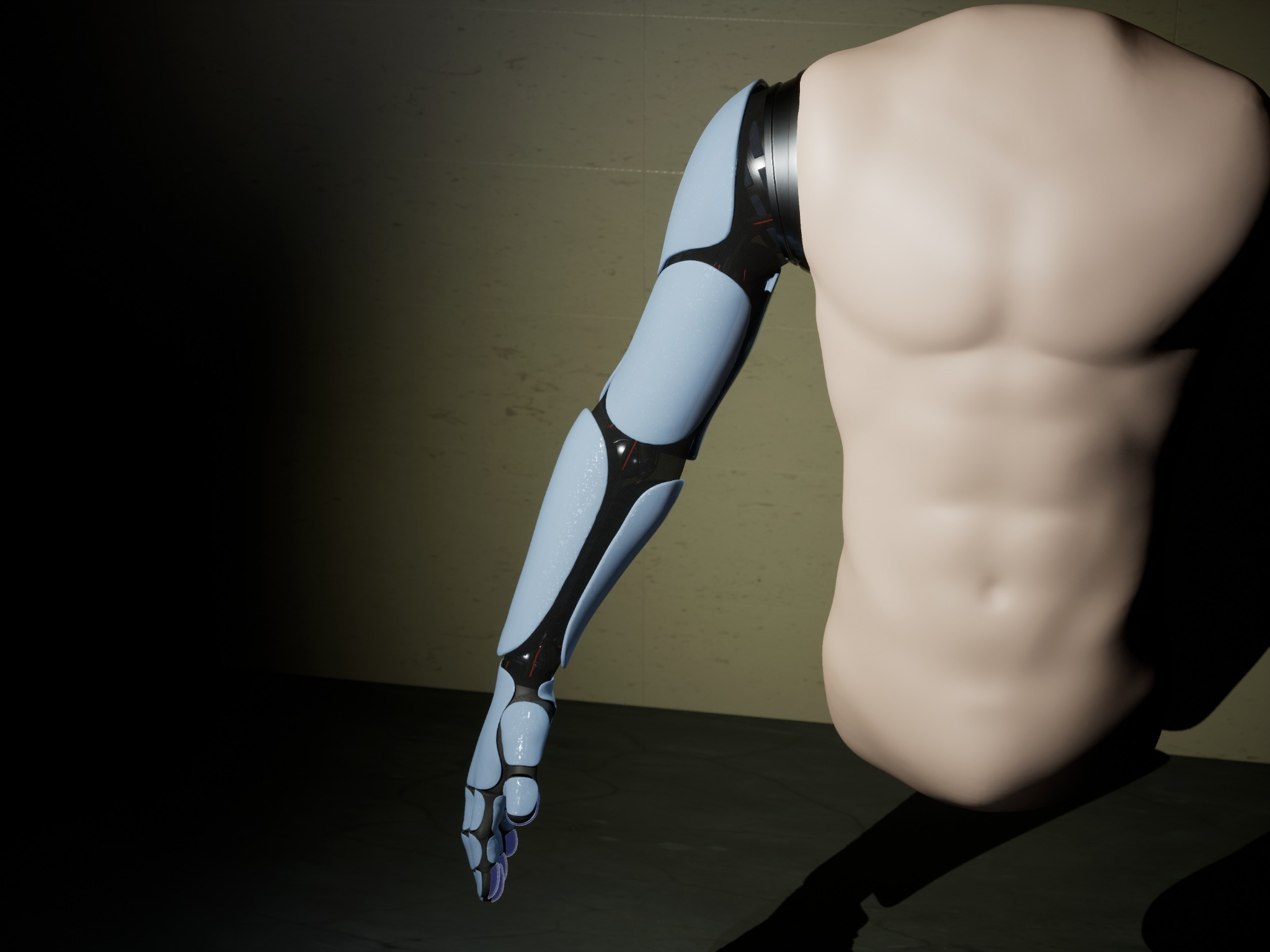
The design balances smooth armor plating, exposed mechanical components, and visible internal wiring. The outer shell creates a readable silhouette, while the exposed mechanisms and red cabling help communicate function and energy flow.
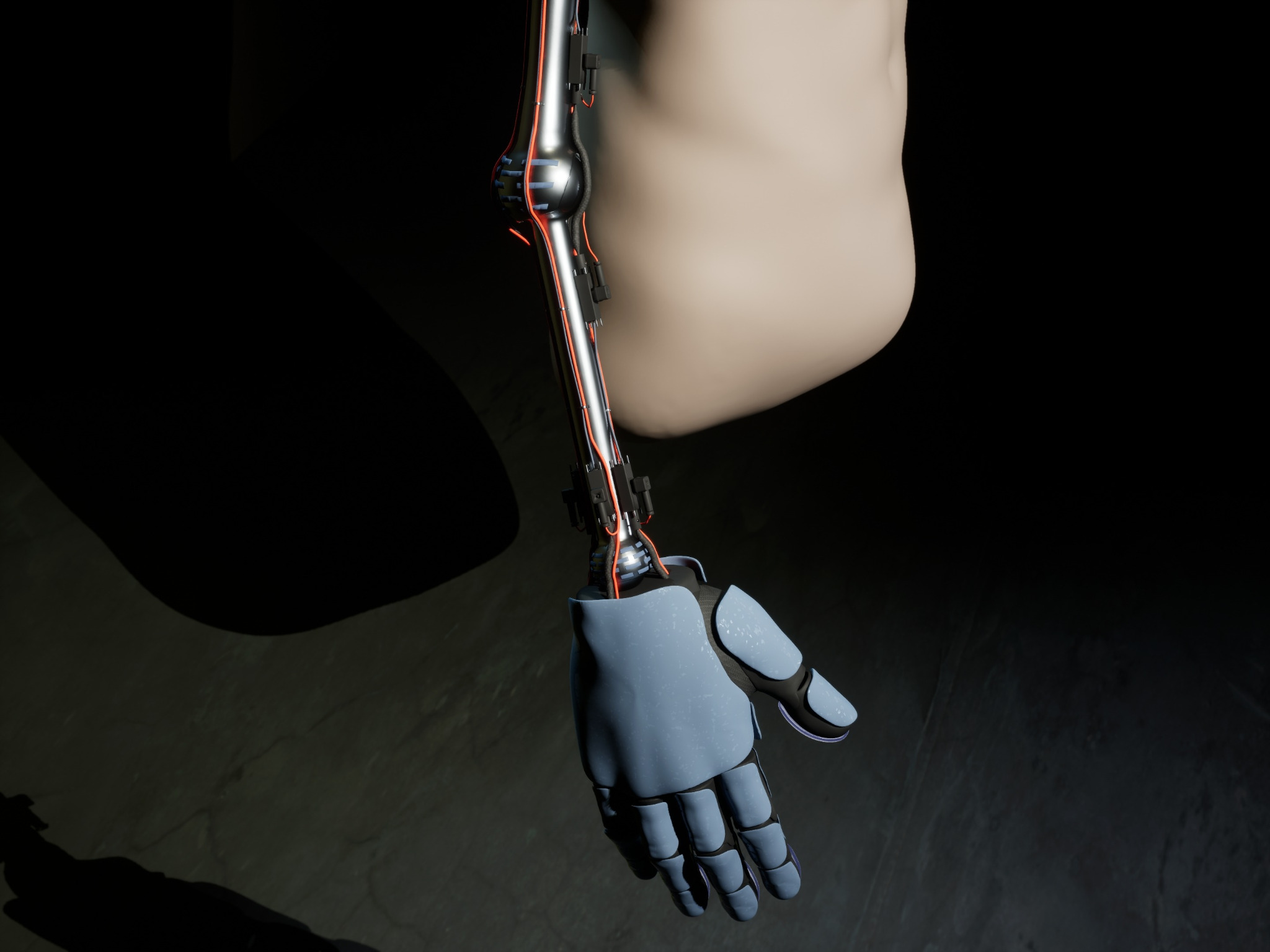
The arm was designed to feel like a functional prosthetic rather than a decorative object. The segmented hand plates, wrist structure, elbow mechanics, shoulder socket, and internal components were all used to suggest articulation, strength, and mobility.
Hydraulic muscle system.
The Biomechanical Arm was designed around a hydraulic muscle system supported by carbon fiber materials.
Traditional prosthetics often rely on mechanical joints to create articulation. These systems can be prone to wear over time because repeated joint movement generates friction and heat, which can affect the grease and lubrication used inside the joint mechanisms.
In contrast, the hydraulic muscle system uses controlled fluid pressure to support joint movement. This allows the arm to bend with added strength and flexibility while reducing the weight associated with more traditional mechanical prosthetic systems.
In my design, hydraulic lines run from the shoulder connection down toward the wrist. Hydraulic valves are positioned at key connection points along the arm, allowing pressure to be controlled within specific joint sections. This creates a system that suggests both mechanical strength and human-like movement while maintaining a lightweight carbon fiber structure.
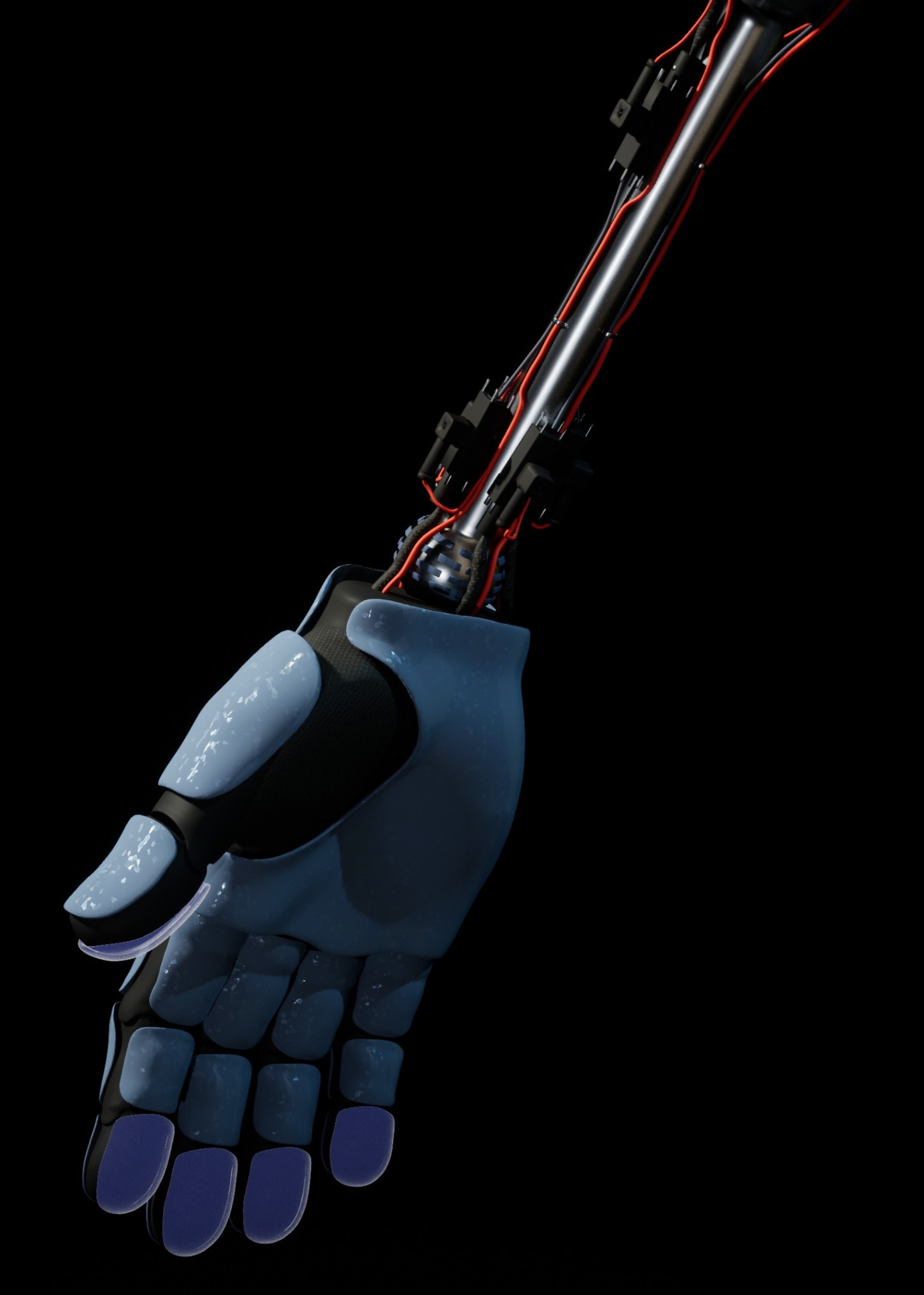
Electromagnetic ball joint concept.
During my studies in Mechanical Engineering, several instructors discussed the future potential of electromagnetic actuation within mechanical systems. Research into electromagnetic bearings and contactless actuation inspired me to explore how similar concepts could influence future prosthetic design.
Traditional prosthetic joints rely on mechanical bearings, pivots, and lubrication to create articulation. Over time, these components generate friction and heat, causing wear on moving parts and increasing maintenance requirements.
My concept explores replacing conventional mechanical articulation with an electromagnetically stabilized ball joint.
The shoulder socket contains a series of electromagnetic coils surrounding a spherical joint. When electrical current passes through these coils, magnetic fields are generated that can continuously stabilize the ball within the socket while applying controlled forces in different directions.
Rather than relying entirely on mechanical rotation, carefully timed electromagnetic pulses could assist in rotating the joint, providing smooth multidirectional movement while reducing physical contact between moving components. By minimizing friction inside the joint, this theoretical system could reduce wear, decrease heat generation, and lessen the need for traditional lubrication.
Combined with the hydraulic muscle system, the electromagnetic joints form part of a conceptual prosthetic that emphasizes lightweight construction, high strength, and fluid human-like movement. While this project is a design exploration rather than an engineering prototype, it demonstrates how emerging technologies could influence the next generation of biomechanical prosthetics.
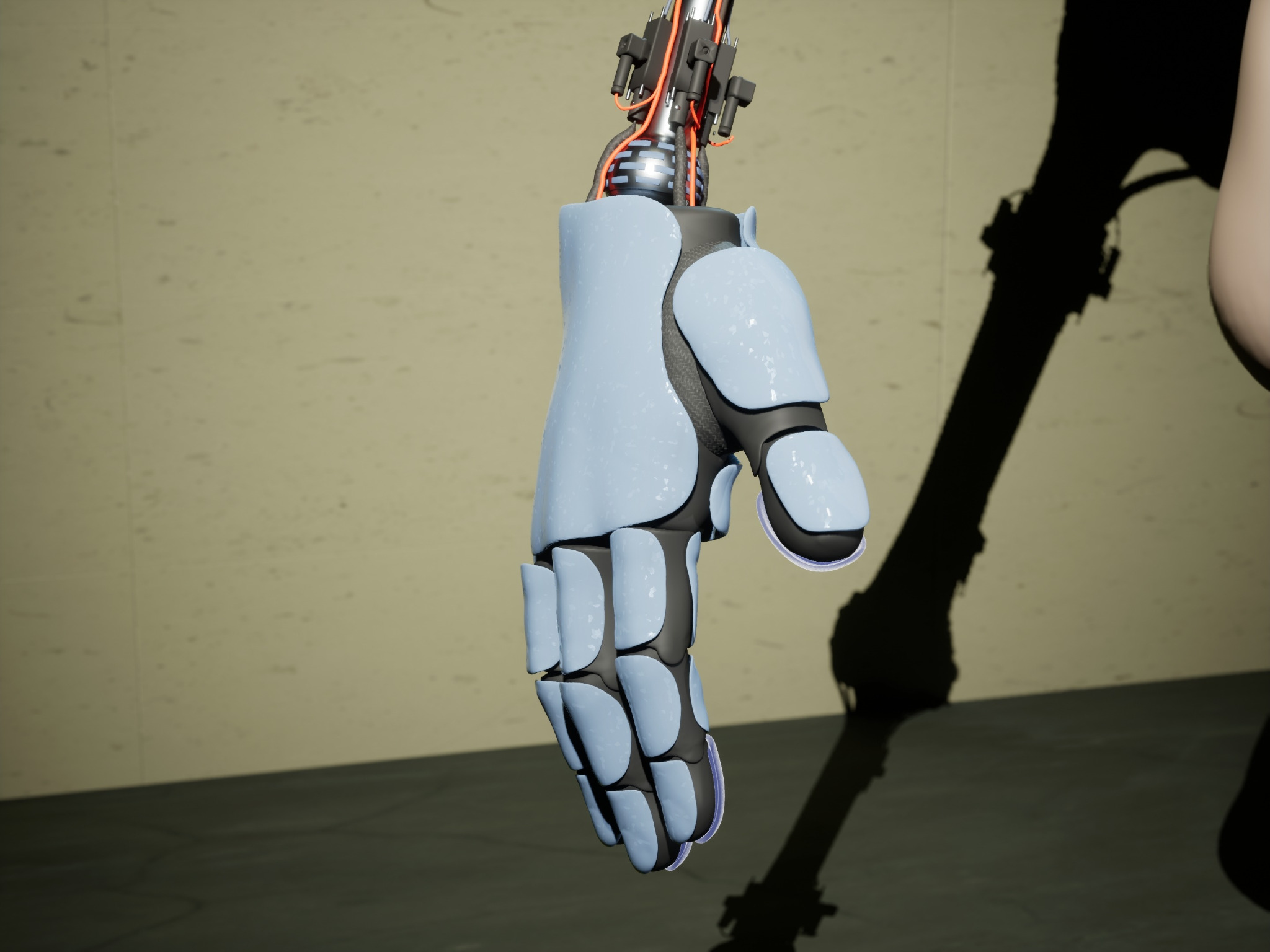
Materials chosen for function, weight, and readability.
The Biomechanical Arm was designed around a combination of advanced composite materials, medical-grade metals, and conceptual technologies. Every material was selected to support a specific functional purpose while reinforcing the overall goal of creating a lightweight, durable, and believable prosthetic system.
Rather than selecting materials purely for their appearance, each component was chosen based on the role it would play within the prosthetic's structure, movement, and interaction.
Carbon Fiber Structural Plating
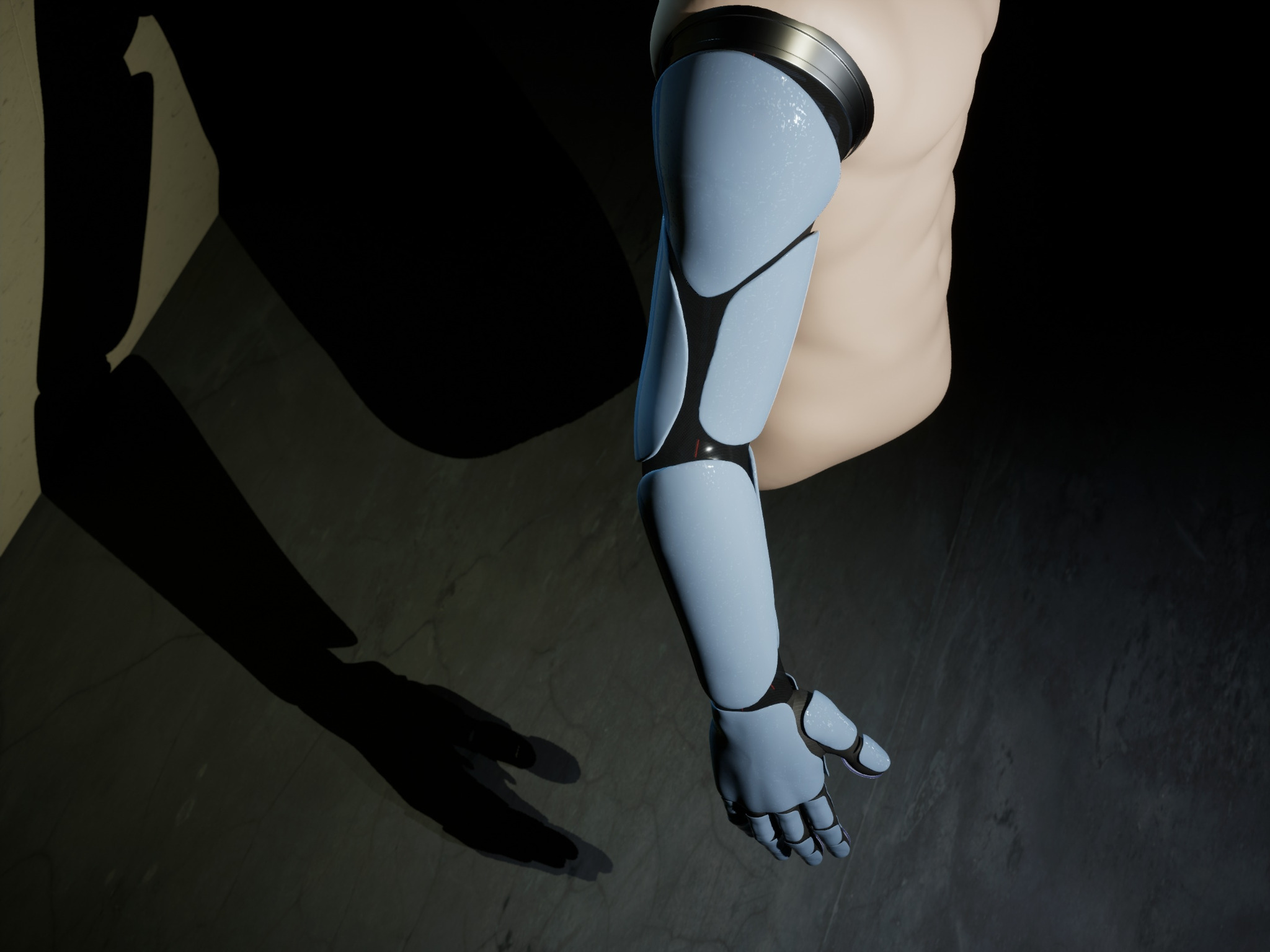
The outer armor of the prosthetic is constructed from carbon fiber composite panels.
Carbon fiber was selected because of its exceptional strength-to-weight ratio, allowing the exterior shell to remain lightweight while protecting the internal mechanical systems. By reducing unnecessary weight, the prosthetic could move more naturally while requiring less energy to operate.
The rigid plating also provides impact protection for the internal components while maintaining a clean, futuristic appearance that reflects the engineering-focused design of the project.
Carbon Fiber Hydraulic Muscles
Rather than relying solely on traditional electric actuators, the prosthetic utilizes a series of carbon fiber hydraulic muscle assemblies.
The decision to use carbon fiber was driven by its exceptional strength-to-weight ratio, allowing the hydraulic muscles to remain lightweight while supporting the internal pressures generated during movement. This reduces the overall weight of the prosthetic without sacrificing structural integrity.
The hydraulic system is designed to more closely replicate the way human muscles generate force. By controlling fluid pressure through hydraulic valves positioned throughout the arm, individual sections can contract and extend in a coordinated manner, producing smoother and more natural joint movement than a purely mechanical linkage.
Using carbon fiber for the hydraulic muscle housings also allows the system to resist deformation under pressure while maintaining a lightweight structure. Combined with the hydraulic control system, this concept was intended to simulate the strength, responsiveness, and fluid motion of human musculature while minimizing unnecessary mass.
Carbon Fiber Mesh
Between the rigid armor plates, the prosthetic utilizes a woven carbon fiber mesh to protect flexible areas of the arm.
Unlike the structural plating, the mesh was designed to provide protection without restricting movement. It shields internal wiring, hydraulic lines, and mechanical components while allowing the joints to articulate freely.
The woven material also visually distinguishes flexible areas from rigid structural components, making the mechanical construction of the prosthetic easier to understand while reinforcing the layered engineering approach used throughout the design.
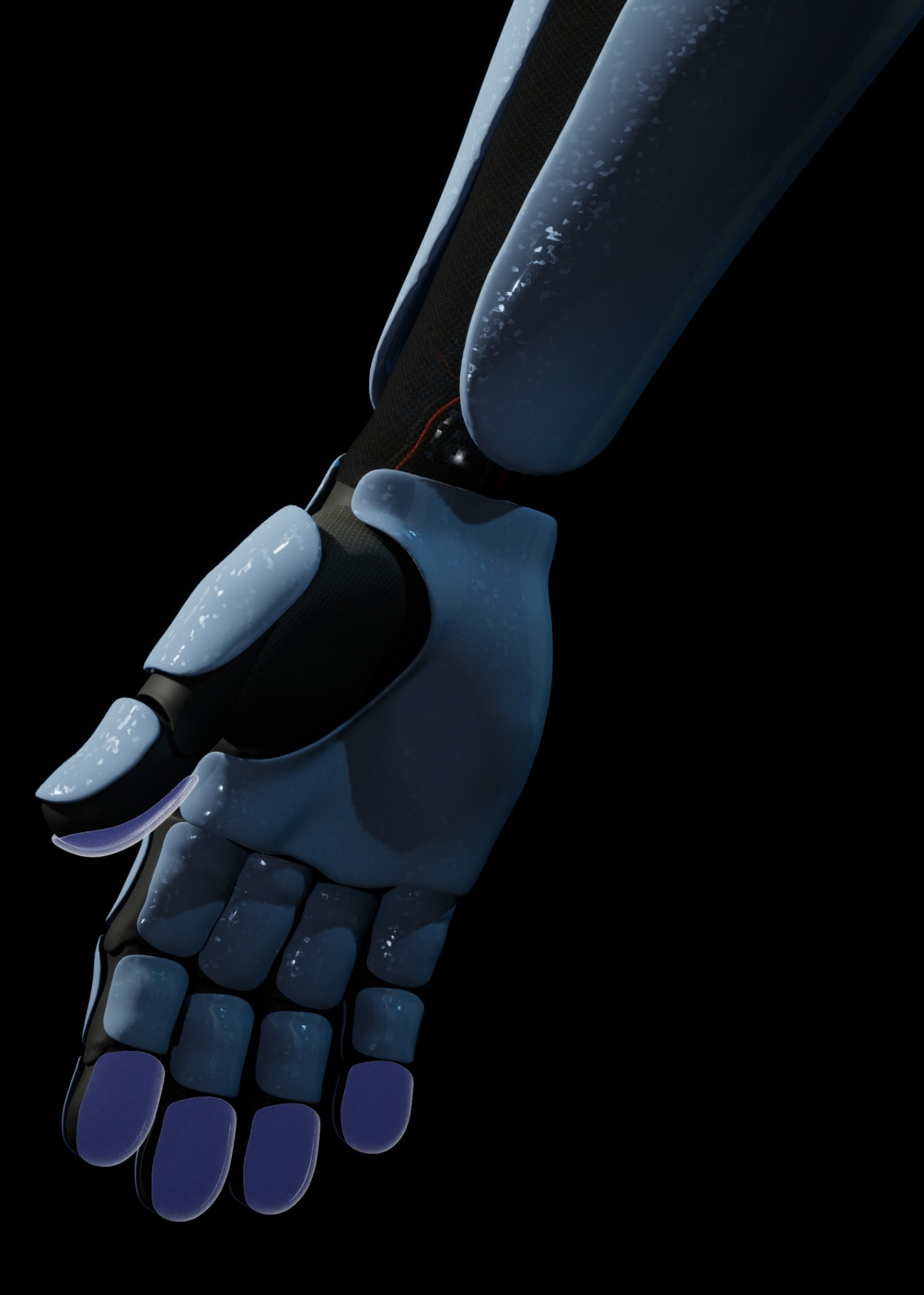
Medical-Grade Titanium Components
The prosthetic's structural framework is constructed from medical-grade titanium, including the forearm support rod, ball-and-socket joints, wrist connection, fasteners, and internal mounting hardware.
Titanium was selected because of its excellent strength-to-weight ratio, allowing the prosthetic to remain lightweight while maintaining the structural strength required to support repeated movement and heavy loads. Titanium is also highly resistant to corrosion and is widely used in medical implants due to its biocompatibility, making it well suited for long-term prosthetic systems.
These components provide the rigid foundation that supports the carbon fiber plating, hydraulic muscles, and electromagnetic joint systems while minimizing the overall weight of the prosthetic.
Electromagnetic Ball-and-Socket System
The shoulder and primary articulation points utilize a conceptual electromagnetically stabilized ball-and-socket system.
Inspired by concepts discussed during my Mechanical Engineering studies, this design explores replacing conventional mechanical articulation with electromagnetic stabilization.
The shoulder socket contains a series of electromagnetic coils surrounding a spherical joint. When electrical current passes through these coils, magnetic fields are generated that continuously stabilize the ball within the socket while applying controlled forces in different directions.
Rather than relying entirely on physical bearings and lubrication, carefully controlled electromagnetic pulses could assist joint movement while reducing friction, mechanical wear, and heat generation.
Electrical Wiring
The prosthetic distributes power through an integrated network of electrical wiring that connects the hydraulic control system, electromagnetic joints, sensors, and internal electronics.
Rather than concealing every cable beneath the outer shell, sections remain intentionally exposed to communicate how power flows throughout the prosthetic and to reinforce the functional engineering aesthetic.
The red wiring also serves as a visual accent, helping guide the viewer's eye through the internal mechanical structure while highlighting important functional components.
Gel Finger Pads
The fingertips utilize medical-grade gel contact pads to improve interaction with surrounding objects.
Instead of rigid mechanical fingertips, the softer gel pads increase surface contact and friction, allowing the prosthetic to grip objects more securely while absorbing small impacts during everyday use.
The pads also introduce a more human-centered element to the design by balancing the industrial mechanical construction with components intended to improve precision, comfort, and fine motor control.
Design Philosophy
Rather than designing a robotic arm composed only of mechanical components, the goal was to create a prosthetic system inspired by modern engineering principles and future technologies.
- Carbon fiber structural plating provides lightweight protection and rigidity.
- Carbon fiber hydraulic muscles simulate the strength and responsiveness of human musculature.
- Carbon fiber mesh protects flexible joints while preserving articulation.
- Medical-grade titanium provides structural strength, durability, and lightweight mechanical support.
- Electromagnetic ball joints explore future methods of reducing friction and mechanical wear.
- Electrical wiring and cable retention clips distribute power while protecting internal systems.
- Medical-grade gel finger pads improve grip, precision, and object interaction.
Together, these materials create a prosthetic concept that balances engineering principles, biomechanics, and industrial design while presenting a believable vision of advanced prosthetic technology.
Biomechanical Arm development walkthrough.
This video presents the same arm breakdown in motion, including the modeling process, internal mechanical details, material choices, and final rendered presentation.